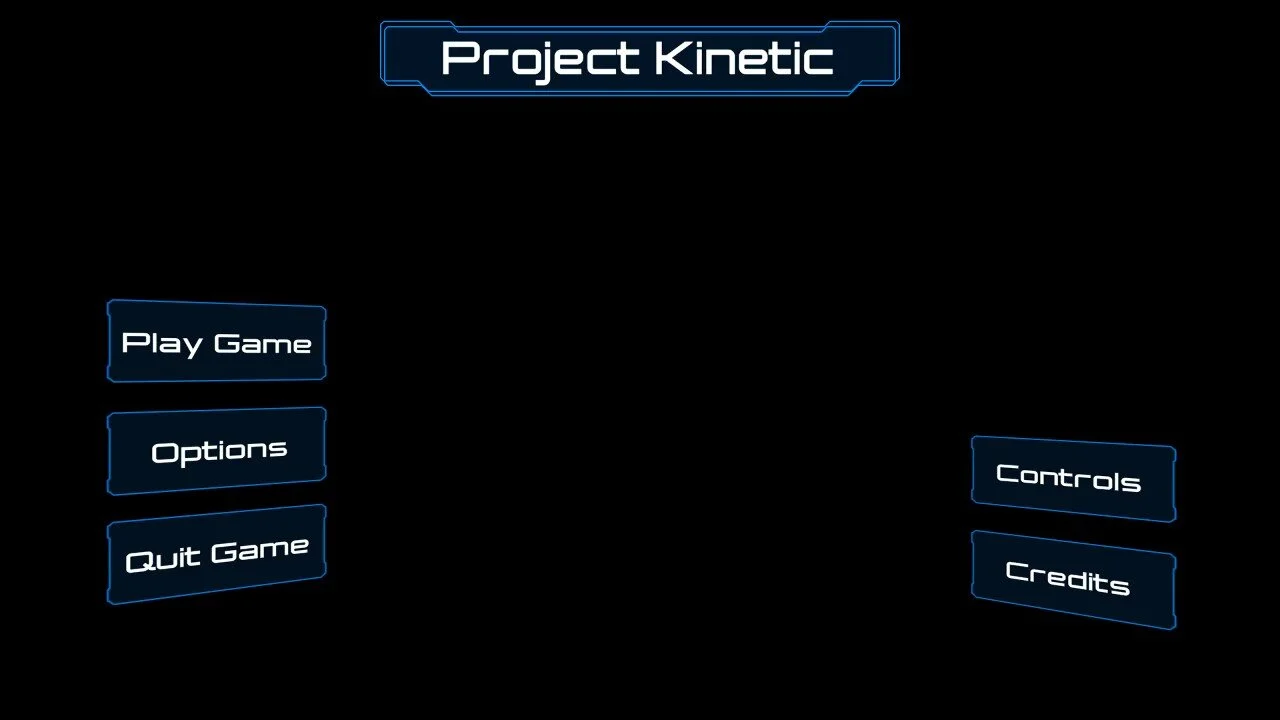
Month 1: Game Design Preproduction
Game Design Preproduction covers what I was tasked with for the first month and details our development processes and design decisions when establishing the foundation for Cyber Kinetic (Formerly known as Project Kinetic)
A video showcasing all we had been able to complete this month.
Overview
This project was completed with several milestones which were comprised of one to two week sprints. At the beginning of each milestone, we as a team would create a Task List which basically served as an overview for what our goals were for that milestone. Each task would be prioritized and broken down to include dependencies and estimated time of completion for the individual or group of individuals the task was assigned to.
This task list would also serve as a criteria for our grade per milestone for this month. While not something I would ordinarily mention, this would become a massive sticking point which I will break down in the conclusion of this dev blog.
Responsibilities
Introduction of the Character Controller
Camera oriented movement vectors
Character animation and rigging
Locomotion aniamtions, Combat animations, Combat Ability animations
Basic Movement
Input to sprint at full speed, Jump
Advanced Movement
Vaulting, Wall-Running, Sliding
Warp Strike Combat ability
Multi verb allows for player to target level-geography to traverse great distances as well as enemies to deal damage
Milestone 1
“Bottom-Up” Development

From the beginning of development the team came together for our first meeting to decide a direction and pitch ideas for the game. One of the core principles we decided early on that we wanted to try and exemplify as much as possible is the idea of Bottom-Up Development, a process in which we primarily focus on making sure the core game play mechanics in our upcoming title are fun and enjoyable. Only then, after we feel that the mechanics are solid and fun, do we derive the narrative and story from the mechanics, not the other way around.
This style of development has it’s own pros and cons as we quickly discovered, especially in long-form development. On one hand, this style of development enabled us to prototype several different mechanics and gave us the most flexibility when deciding which direction we wanted to go. However, this style also made it harder for us to maintain a unified image of what the gold build would be.
When we decided on this development style at the beginning of this project, we really didn’t understand some of the more unforeseen cons such as the blocker prone style and how all of our visions of the final product varied drastically. We would eventually change our approach to development and I’ll go into more detail once we reach that point.
Iteration of Player Movement
Oh boy, where to begin with the player controller. This was a task I originally decided to take on myself because of my experience with designing the 2D character controller from a previous project called Flip Hop. Little did I know how much iterative work would need to be done over the course of the entire development cycle; this would become my primary focus over the course of development unbeknownst to me at the time.
During the first week of the sprint I spent some time researching how 3D movement controllers used the forward vector of the camera to determine player direction. Basically, whichever way the camera faced, that would become the new player’s forward vector when the controller read a player input.
I also spent this sprint learning how to and setting up the character rigging and animation state controller in Unity. All of the animation was sourced from Mixamo. Once imported, I set up the animation controller to play specific animations and transition to different blend states when certain parameters were met.
Milestone 2
Iterative Design: Abilities and Combat
For this next sprint the team began introducing new mechanics, iterating existing mechanics, and removing unnecessary mechanics. Some of the action items left on the cutting room floor include an ability that could be used to slow down time, enemy turret guns that would shoot at the player, jump pads to launch the player into the air, and a mini-map. Most of these mechanics would be cut as we started to focus in on our core gameplay loops which revolved around hand-to-hand combat and advanced player traversal.
We would iterate on these core loops by adding in advanced movement such as wall-running and vaulting as well as adding in a combo system bolstered by combat abilities such as a warp strike ability and spin tornado attack.

We added a base level skill tree with the original intention to unlock abilities as you progress through the game.
Advanced Movement and Warp Strike
My main focus for Milestone 2 was expanding on the present traversal system and introducing a combat ability: Warp Strike.
The team had agreed by this point that we would focus on hand-to-hand combat as well as advanced player traversal as our key pillars moving forward. For advanced player traversal, I looked to implement a vault system and wall run system to give our level designers more opportunities to allow the player to showcase their platforming prowess.
Month 2: Game Systems Integration
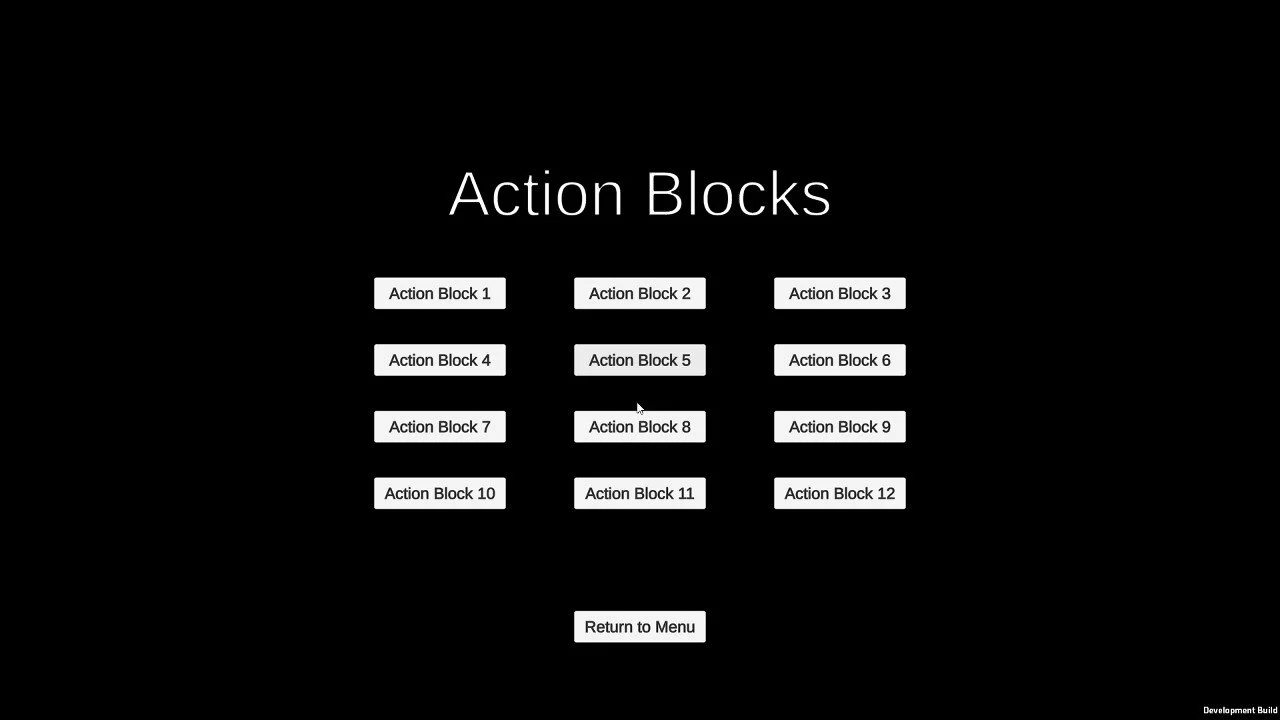
Game Systems Integration goes over our second month of development, introduces the idea of action block prototyping, and sees a change in the way we approached our game after establishing our core design pillars the previous month.
A video showcasing a few of the action blocks we completed this month.
Overview
Now that we had defined our core pillars it was time to start brainstorming setup ideas and interlacing the systems that we had individually worked on last month.
This month saw the introduction of action blocks, short setups of any difficulty that were to represent possible final build setups or to showcase any interesting interactions that we could derive final levels from.
Personally, I felt that this month was also a month of huge learning experiences: learning how to problem solve not only design and scripting problems, but also how to tackle team communication issues and the importance of project organization.
Responsibilities
Implementing new state based Character Controller
Adding obstacle analysis for correctly setting positions to vault, climb, and mantle to
Make the controller more designer friendly to be able to quickly add states and implement changes
Add Warp-Strike Affordances
Assist in various scripting tasks
Lots and lots of bug fixing
Character collision resolution on second character controller
Warp strike positional bugs
Milestone 3
With any Game Development cycle, the team must learn how to adapt to any unforeseen obstacles and work around any bumps in the road. We learned this as a team when the first scheduled week of this milestone was interrupted by the threat of category-5 hurricane Dorian possibly making landfall in Orlando. The campus was closed and we prioritized the entire team’s safety and hurricane preparation over our game’s development.
Once the threat of the hurricane had passed, we reconvened to work out a new schedule that which would eventually see us working two 14-day milestone sprints as opposed to the original three sprints in order to still meet our scheduled release date. This meant we had less time to trial brand new mechanics and systems as we focused on expanding and refining those that had already been implemented and complemented our core design pillars.
Action Blocks
We decided to split up our efforts and set a goal of two action blocks completed each milestone per person. These action blocks were to showcase expanded-upon mechanics and systems as well as simple setups which could be used in our levels. What was great about this system was that we had several different approaches to the design of our game as well as cutting down on idea debating by showing the team what was great about a design rather than just telling them. If this wasn’t enough to convince you of how good this system of design can be, take it from the experts! This same system was also used in designing Titanfall 2’s single player campaign.